Stop Asking Forums and Start Hearing EQs in Real Mixes
The best EQ plugin for vocals is not the one that gets the most hype in forums. It is the one that still sounds good when the session is huge, the CPU meter is angry, and you have a deadline staring you down. That is why so many "top 10 EQ" lists fall apart once you drop those shiny plugins into a dense vocal mix.
Parity EQ by Stagecraft Software belongs in this conversation because its flexible EQ bands, filters, and shelving options cover the vocal jobs that come up most often: cleaning low-mid buildup, refining presence, and adding top-end lift. It is available from Audio Plugin Deals for engineers who want one plugin that can handle both focused correction and broader vocal shaping.
Here, we will focus on four EQ plugins for distinct vocal-mixing needs, along with practical frequency starting points for making better decisions inside actual songs.
Redefining the Best EQ Plugin for Real Vocal Work
Asking "What is the best EQ plugin for vocals?" is kind of like asking "What is the best mic?" The answer changes with the singer, the song, and the room. The best choice for a bright pop lead might be wrong for a warm, whispery ballad.
For most vocal work, it helps to think in three EQ categories:
- Transparent digital EQs for clean, surgical moves
- Character or analog-style EQs for tone and color
- Dynamic EQs for taming harshness and resonances
The strongest choice is the plugin that solves the problem in front of you without creating a new one. A clean vocal that only needs a small cut may benefit from a precise parametric EQ, while an inconsistent performance with sharp notes may need dynamic control instead of a permanent dip.
Testing Vocal EQs in Realistic Session Scenarios
Real mix context matters more than an EQ's soloed sound. Listen with the full arrangement playing, level-match before comparing plugins, and choose the one that keeps the vocal clear without making it thin, brittle, or disconnected from the track.
A dense pop mix with stacked harmonies may call for dynamic control, while an intimate singer-songwriter recording may need subtle cleanup and a gentle air shelf. An aggressive hip hop vocal may need a more assertive presence move or character shaping to cut through 808s and sharp drums.
Key Vocal EQ Features That Actually Matter
For vocals, the most useful features are the ones that help you make fast, controlled decisions:
- Adjustable bands and filter shapes for low-cut and corrective work
- Dynamic EQ control for harshness, sibilance, and changing resonances
- Broad shelves for presence and air
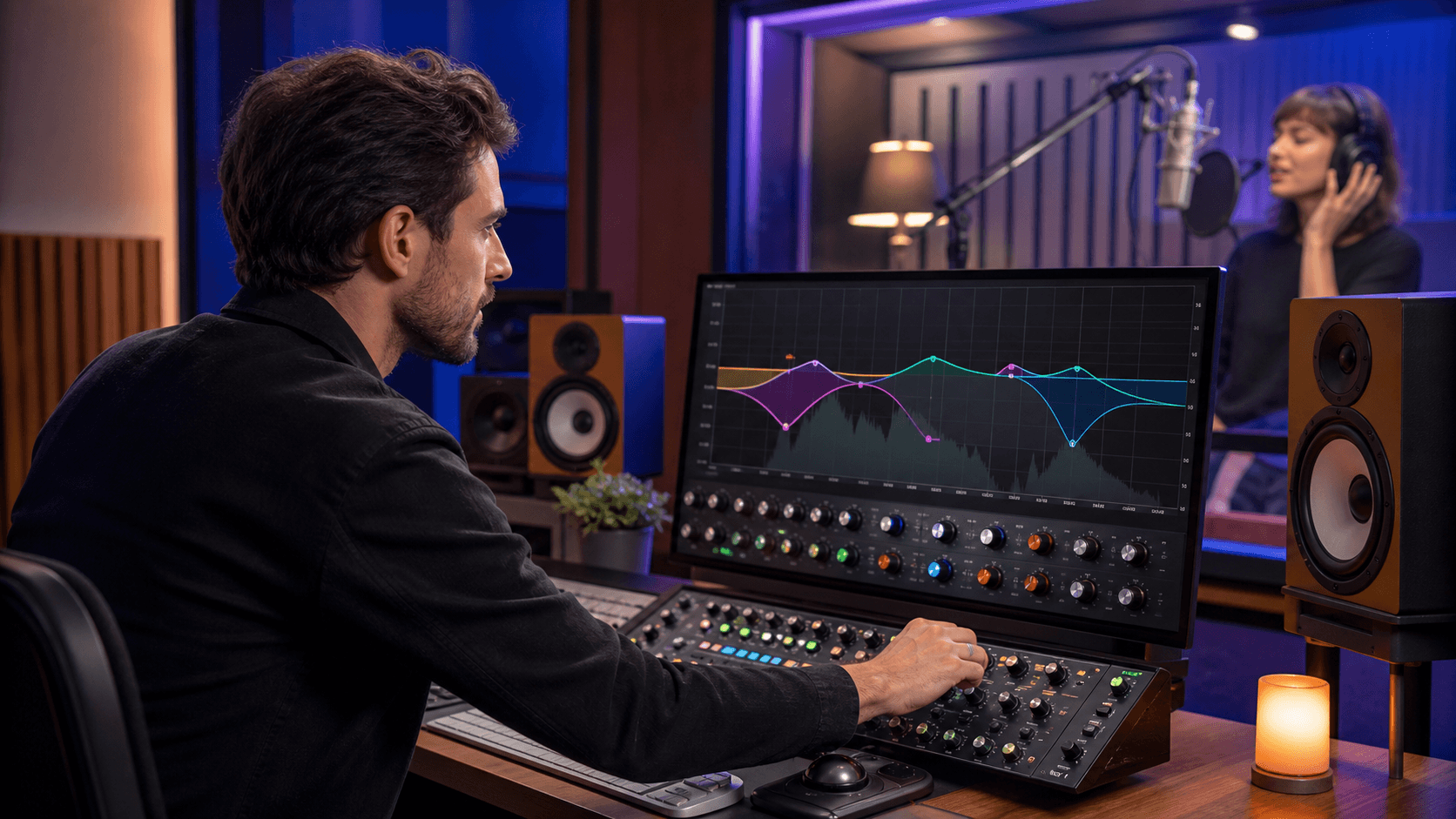
- A clear display that makes problem areas easier to find in a busy session
Mid/Side processing can also help when shaping stereo ad libs or vocal ambience around a centered lead, but it is not necessary for every vocal chain. Start with the simplest move that solves the audible issue.
Building a Flexible Vocal EQ Chain From Discounted Plugins
A small collection of EQ plugins can cover most vocal work when each option has a clear role. The following comparison focuses on four specific choices and the situations where each one is strongest.
- Parity EQ by Stagecraft Software: Best for flexible corrective work and final vocal shaping in one plugin. Its adjustable bands, filters, and shelves make it a practical choice for removing low-mid buildup, refining presence, and adding a controlled high-end lift. It is strongest when you want a single EQ that can move from cleanup to finishing without changing plugins.
- FabFilter Pro-Q 3: Best for transparent corrective work in detailed or crowded mixes. Its dynamic EQ bands, spectrum display, and Mid/Side options are useful when a vocal has narrow resonances, inconsistent harshness, or conflicts with dense instrumentation. It is strongest for engineers who want highly precise control while keeping the vocal's original tone intact.
- TDR Nova: Best for dynamic harshness control and frequency-selective vocal compression. Its dynamic EQ sections can reduce aggressive 2 to 5 kHz notes only when they jump forward, rather than permanently dulling the entire vocal. It is strongest for uneven recordings, forceful singers, and mixes where presence changes from line to line.
- Soundtoys Sie-Q: Best for analog-style tone shaping and musical top-end enhancement. Its simple low, mid, and high bands encourage broad moves, while its character can add weight, presence, or sheen without turning a vocal chain into a complex correction process. It is strongest when the recording is already solid and the vocal needs warmth, attitude, or a more polished sense of air.
A basic starting chain might use Parity EQ or Pro-Q 3 for a gentle high-pass and mud cleanup, TDR Nova when harshness changes with the performance, and Sie-Q when the vocal needs more tone than correction. You do not have to use every stage on every song.
Turn Your Next Vocal Mix Into an EQ Shootout
Use the comparison as a decision guide rather than a reason to stack more plugins. Choose Parity EQ or Pro-Q 3 when the vocal needs clean correction, TDR Nova when the problem only appears on certain words or notes, and Sie-Q when the main goal is color and musical enhancement.
If two options seem equally effective, keep the one that gets the vocal into place faster while preserving the singer's character in the full mix. That is usually more valuable than extra features you will not use.
Practical Vocal EQ Starting Points
These frequency ranges are starting points, not fixed rules. The singer, microphone, recording, and arrangement determine the final settings, so make each move by listening to the vocal in context.
- 200 to 400 Hz: Look here for mud, thickness, or boxiness. A gentle cut with Parity EQ or FabFilter Pro-Q 3 can make a crowded vocal clearer, while a dynamic move in TDR Nova can help if the buildup changes from note to note.
- 2 to 5 kHz: This range affects harshness and presence. A broad boost can help a vocal speak through the mix, but dynamic reduction is often the better answer when consonants or loud notes become aggressive.
- 5 to 9 kHz: This is a common sibilance range. TDR Nova is especially useful when S and T sounds only become excessive at certain moments, because its dynamic behavior can control them without darkening the full performance.
- 10 kHz and above: This range adds air. A gentle high shelf in Parity EQ can bring openness to a clean recording, while Soundtoys Sie-Q is a good option when you want that lift to bring some analog-style character as well.
Shape Your Mix With Pro-Level Control Today
If you want one EQ plugin that aligns with the criteria in this article, Parity EQ is a strong fit for vocal mixers who need flexible cleanup, presence shaping, and air from the same interface. It makes the most sense when you want a straightforward option for real mix decisions rather than a separate plugin for every small task. You can find it at Audio Plugin Deals when it suits the way you work.